

A slow stitch project is defined as a mindful, process-oriented hand-sewing practice where the joy comes from stitching itself, not from producing a perfect finished piece. You work intuitively with fabric scraps, simple stitches, and minimal tools, letting the work grow organically without a fixed plan. The practice sits at the crossroads of therapeutic crafting and sustainable making, drawing on techniques like the running stitch, seed stitch, and French knot to create textured, personal textile art. Research links it to measurable mental health benefits, including reduced stress and improved mood. If you have ever wanted a creative outlet that asks nothing of you except your presence, slow stitching is it.
What is a slow stitch project, and what techniques does it use?
Slow stitching is the recognized practice name for this style of intuitive hand embroidery, and the phrase “slow stitch project” describes any piece made through this approach. The core slow stitching techniques are deliberately simple: running stitch, back stitch, seed stitch, and French knot. Each one can be learned in minutes, which means you spend your time stitching rather than studying.
The materials are just as accessible. Most slow stitchers work with fabric scraps, favoring natural fibers like linen, cotton, and flannel because they feel good in the hand and age beautifully. Upcycled materials are especially popular. An old shirt, a worn tea towel, or a scrap of vintage curtain fabric all make excellent starting points.
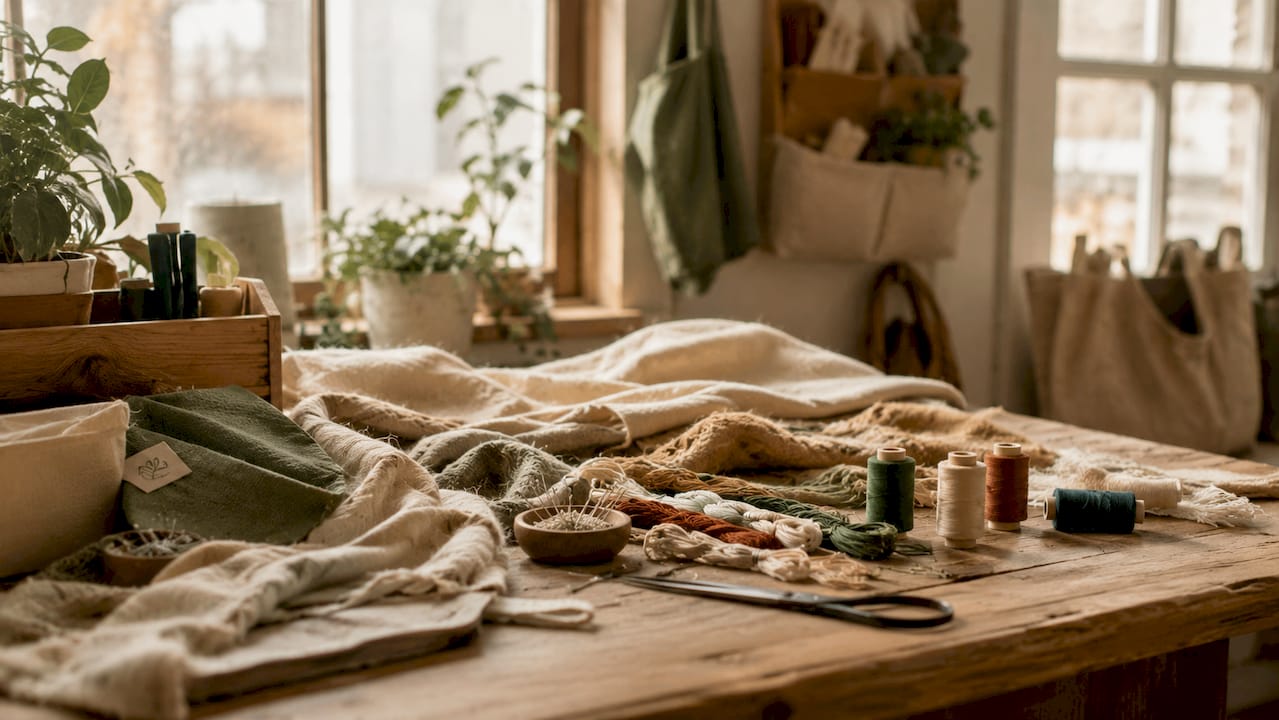
Your tool kit stays small on purpose. You need a needle, thread, and scissors. That is genuinely the full list. Portable, minimal setups encourage short, stress-free sessions of 10–20 minutes, which is exactly the kind of low-barrier practice that builds a lasting habit.
The approach is improvisational by design. You do not follow a pattern or plan your color palette in advance. You pick up your fabric, choose a thread color that appeals to you in the moment, and begin. That freedom is the whole point.
- Running stitch: A simple in-and-out stitch that creates lines and texture
- Back stitch: Produces a solid, continuous line with more visual weight
- Seed stitch: Small, scattered stitches that fill space with organic texture
- French knot: A raised, dotted stitch that adds dimension and detail
- Layering scraps: Basting or stitching fabric pieces on top of each other for depth
Pro Tip: Skip heavy embroidery hoops when you start. Stitching without a hoop keeps your work soft and flexible, and it preserves the organic, handmade quality that makes slow stitching so appealing.
How does slow stitching benefit mental health?
The mental health benefits of slow stitching are well documented and significant. 81% of hand-sewing crafters reported feeling happier after stitching, and 54% noted an improvement in their overall mood. Those numbers reflect something real: rhythmic, repetitive hand work lowers stress hormones and heart rate in a way that mirrors established mindfulness techniques.
“Rhythmic, repetitive stitching reduces stress hormones and heart rate, acting as a form of non-verbal therapy that supports emotional regulation and calm.”
Slow stitching works as a form of non-verbal therapy because it occupies your hands and your attention without demanding language or logical thought. When your mind is busy tracking the feel of thread through fabric, it cannot simultaneously spiral through anxious thoughts. The sensory focus of stitching, including the resistance of thread, the texture of fabric, and the rhythm of the needle, grounds you in the present moment. That is mindfulness in its most practical form.
The social dimension adds another layer of benefit. Group stitching sessions reduce loneliness and build a sense of belonging, effects that are recognized in therapeutic settings. Stitching circles and community groups amplify the emotional benefits well beyond what solo practice delivers.
Slow stitching also functions as a digital detox. You cannot scroll and stitch at the same time. Choosing to pick up your needle for even 15 minutes is a deliberate act of reclaiming your attention from screens. Over time, that habit builds a meaningful counterbalance to the constant pull of digital life.
How do you start your own slow stitch project?
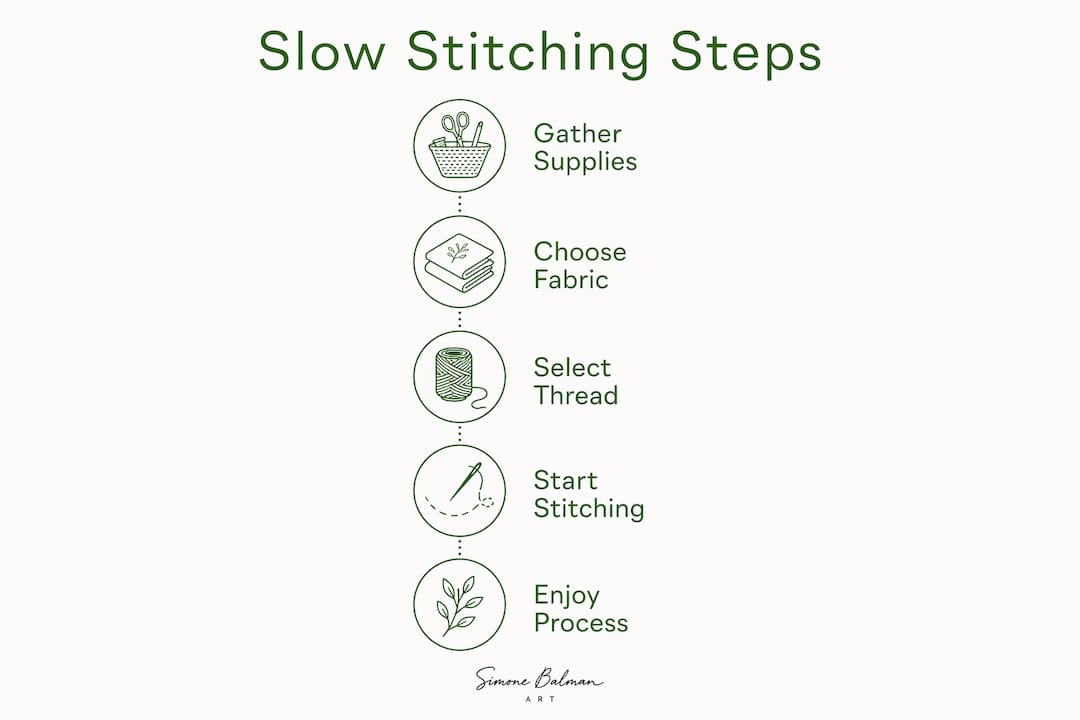
Starting is easier than you think, and the best first project is a “memory square.” A memory square is a small piece of base fabric, roughly 6 by 6 inches, onto which you layer scraps and stitch freely for 20–30 minutes. There are no rules for when it is finished. You stop when it feels right.
The main barrier for beginners is perfectionism. Slow stitching’s beauty lies in its irregularities. A crooked line of running stitch is not a mistake. It is texture. It is evidence of a human hand at work. Letting go of that perfectionist instinct is the single most important skill you will develop.
Here is a simple process to get your first project started:
- Choose a base fabric. A piece of linen or cotton roughly 6 by 8 inches works well. Wash it first so it feels soft.
- Gather two or three fabric scraps. Different textures and colors add visual interest. Torn edges are fine and often look better than cut ones.
- Layer your scraps on the base. Arrange them loosely. Pin or baste them in place if you like, or just hold them as you stitch.
- Thread your needle and begin. Start with a running stitch along the edge of a scrap. Follow the shape, or ignore it. Both are valid.
- Stitch for 10–30 minutes. Set a gentle timer if that helps you relax into the process without watching the clock.
- Stop when you feel satisfied. Not when the piece looks “done.” When you feel done.
If you are new to hand stitching in general, a beginner’s guide to stitching techniques can help you build confidence with needle and thread before you go fully freeform.
Pro Tip: Keep your slow stitch kit in a small bag by your favorite chair. The easier it is to pick up, the more often you will. Accessibility is the secret to consistency.
What are some creative slow stitch project ideas?
Slow stitching produces a wide range of finished pieces, and the variety is one of its greatest strengths. The practice suits both decorative and functional making, and it scales from a 20-minute pocket project to a months-long evolving work.
Slow stitch projects can function as personal diaries, where even “failed” experiments get incorporated into new works. A piece you set aside six months ago might become the perfect background layer for something new today. That evolving, non-linear quality is one of the things that separates slow stitching from more structured crafts.
- ️ Framed textile art: Layer scraps and stitch freely, then frame the result as wall art
- Stitch books: Bind several stitched squares together into a small textile journal
- Textile mandalas: Work outward from a center point using seed stitches and French knots
- Visible mending: Repair worn clothing with decorative stitching that celebrates the repair
- Textile brooches: Stitch a small piece, back it with felt, and add a pin for a wearable result
- Embellished garments: Add slow-stitched patches or borders to plain jackets and bags
The sustainability angle is real and worth embracing. Slow stitching encourages a sustainability-first mindset by reusing fabric scraps and incorporating older stitch pieces into new projects. You are not buying new materials. You are honoring what already exists.
| Project type | Skill level | Time per session | Materials needed |
|---|---|---|---|
| Memory square | Beginner | 20–30 minutes | Base fabric, scraps, needle, thread |
| Framed textile art | Beginner | 30–60 minutes | Fabric scraps, frame, needle, thread |
| Visible mending | Beginner to intermediate | 20–45 minutes | Worn garment, thread, needle |
| Stitch book | Intermediate | Multiple sessions | Stitched squares, binding materials |
| Textile mandala | Any level | 30–60 minutes | Fabric scraps, varied thread colors |
For gift-giving inspiration, small stitched projects translate beautifully into meaningful handmade presents. A stitched brooch or a framed memory square carries far more personal weight than anything store-bought.
Key Takeaways
Slow stitching is a mindful hand-sewing practice that uses simple stitches, fabric scraps, and short focused sessions to reduce stress and build lasting creative joy.
| Point | Details |
|---|---|
| Core definition | Slow stitching prioritizes the meditative process over a perfect finished product. |
| Simple techniques | Running stitch, back stitch, seed stitch, and French knot are all you need to start. |
| Mental health impact | 81% of crafters report feeling happier after stitching; mood and stress both improve measurably. |
| Beginner entry point | A memory square project takes 20–30 minutes and has no strict rules for completion. |
| Sustainability value | Slow stitching reuses fabric scraps and incorporates older pieces into new works. |
Why slow stitching changed how I think about making
I used to believe that a finished, polished piece was the only valid outcome of a creative session. Slow stitching dismantled that belief completely. The first time I sat down with a handful of linen scraps and no plan, I felt genuinely uncomfortable. My instinct was to sketch something out, to have a goal. I resisted it, and what happened in those 20 minutes surprised me.
The creative rebellion against fast-paced culture that slow stitching represents is not just a philosophy. It is something you feel in your hands. The rhythm of the needle, the slight resistance of thread through fabric, the way a piece of worn cotton softens as you work it. That sensory experience is the point. The textile you produce is almost secondary.
What I tell anyone who asks is this: your crooked stitches are not flaws. They are the record of your attention on a specific afternoon. That is worth more than a technically perfect piece you felt nothing making. Short sessions of 10–20 minutes are enough. You do not need hours. You need presence.
If you are drawn to nature-inspired stitch designs, slow stitching pairs beautifully with organic motifs. Leaves, petals, and flowing lines all suit the improvisational style. Start there if you need a gentle visual anchor before going fully freeform.
— Simone
Patterns and tools to support your stitching practice
Slow stitching thrives on simplicity, but having the right resources behind you makes every session more enjoyable. Simone Balman Art offers a free fabric size calculator that helps you plan your base fabric before you cut, so you start each project with confidence rather than guesswork.
The Simone Balman Art pattern collection also includes designs across flowers, animals, ocean themes, and seasonal motifs, all created with clear charts and an enjoyable stitching experience in mind. Whether you want a structured cross stitch pattern to complement your slow stitch practice or a pattern size calculator to plan your next piece, the tools are free and ready to use. Browse the full collection at Simone Balman Art and find what inspires you next.
FAQ
What is a slow stitch project exactly?
A slow stitch project is a piece of hand-sewn textile art made using simple, intuitive stitches on fabric scraps, with no fixed pattern or completion rules. The focus is on the meditative process of stitching rather than producing a perfect result.
What materials do you need for slow stitching?
You need a needle, thread, and fabric scraps. Natural fibers like linen, cotton, and flannel work especially well. Upcycled or repurposed fabric is encouraged.
How long does a slow stitch session take?
Sessions of 10–30 minutes are enough to experience the calming benefits. There is no minimum or maximum time. You stop when you feel satisfied.
Is slow stitching good for mental health?
Yes. Research shows 81% of crafters feel happier after stitching, and the rhythmic motion reduces stress hormones and heart rate. Group stitching also reduces loneliness.
Can a complete beginner start slow stitching?
Absolutely. A memory square project requires only three basic stitches and no prior experience. The practice is designed to welcome imperfection, which makes it one of the most beginner-friendly textile crafts available.


