

What is a monochromatic stitch design?
A monochromatic stitch design is a needlework composition built entirely from one color hue, expanded through its tints, shades, and tones. Rather than pulling from multiple colors, you work within a single color family, using lighter and darker variations to create depth, dimension, and visual interest. According to the EGA Embroidery Needlework Glossary, monochromatic schemes employ one hue with variations in lightness and saturation to achieve dimension.
Here is how those three variations actually work:
- Tints are created by adding white to a hue, making it lighter and softer (think pale sky blue from a deep cobalt).
- Shades are created by adding black, deepening the color for shadow and contrast.
- Tones are created by adding gray, which mutes the hue and gives it a subtle, sophisticated quality.
Together, these variations let you build a design that feels rich and layered, even though you never reach for a second color — a technique easily enhanced by using DIY henna stencils to experiment with template artistry approaches. The result is a piece defined by harmony, visual cohesion, and a quiet elegance that is hard to achieve any other way.
Table of Contents
- What do monochromatic stitch designs actually look like?
- Monochromatic vs. monochrome: what is the difference?
- Which colors work best for monochromatic stitching?
- The artistic challenge of working in a single hue
- Materials and threads for monochromatic stitch designs
- Techniques that make monochromatic designs work
- The history behind single-color embroidery
- Key Takeaways
- FAQ
What do monochromatic stitch designs actually look like?
Seeing examples is the fastest way to understand this style. Monochromatic designs show up across a wide range of motifs and project types, and once you know what to look for, you will spot them everywhere.
- Floral patterns are among the most popular choices. Imagine a rose stitched entirely in shades of dusty pink, from the palest blush at the petal edges to a deep rose at the center. The color shift creates form without a single contrasting hue. You can explore floral cross stitch designs for inspiration on how this looks in practice.
- Botanical and leaf designs work beautifully in greens, moving from a near-white sage to a rich forest green to suggest light falling across foliage.
- Animal portraits, such as a cat or bird, use graduated grays or warm tans to suggest fur texture and shadow.
- Geometric and tiled patterns use value shifts within a single hue to create the illusion of depth and three-dimensionality.
- Vintage and heritage motifs, including traditional sampler borders and folk art patterns, have a long history in single-color work, particularly in blue-on-white or red-on-linen styles.
Monochromatic style suits projects where you want a calm, unified look, such as home décor pieces, framed art, or gifts with a refined, understated feel.
Monochromatic vs. monochrome: what is the difference?
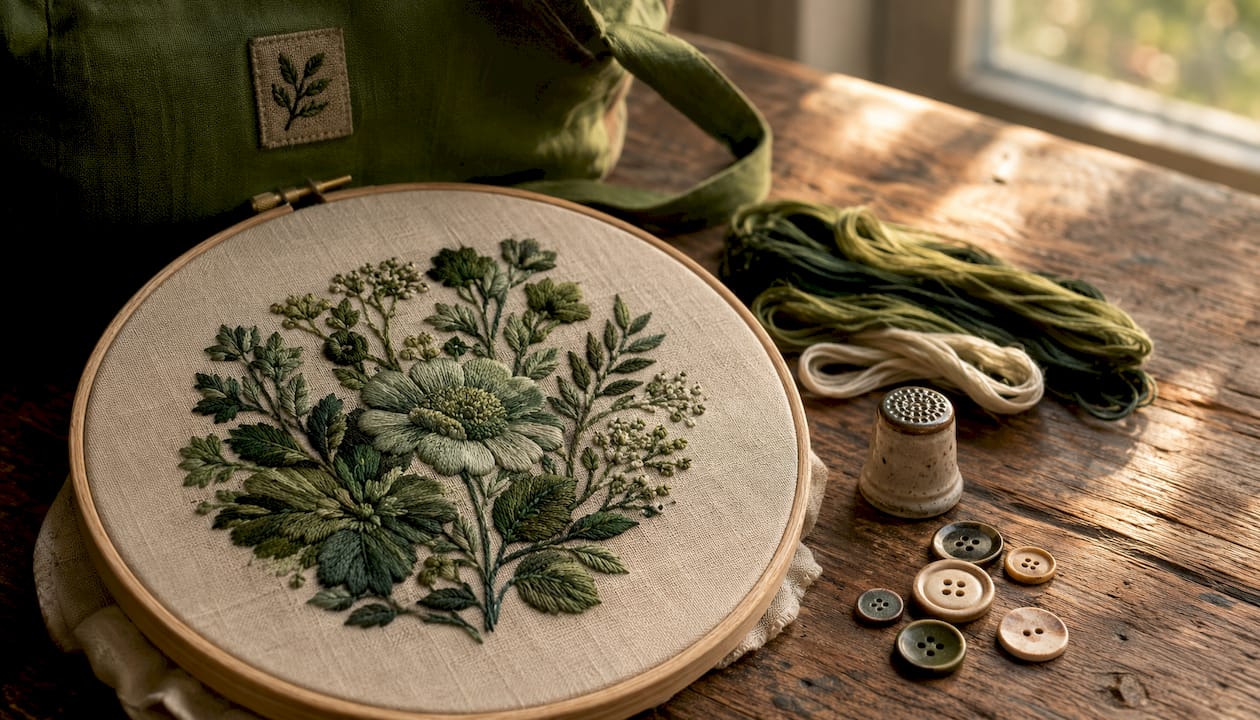
These two terms get mixed up constantly, and the distinction genuinely matters for your stitching. Monochrome strictly refers to black, white, and gray, working through grayscale contrast to define form and texture. Monochromatic, by contrast, uses various tones of a single color, which could be any hue at all.
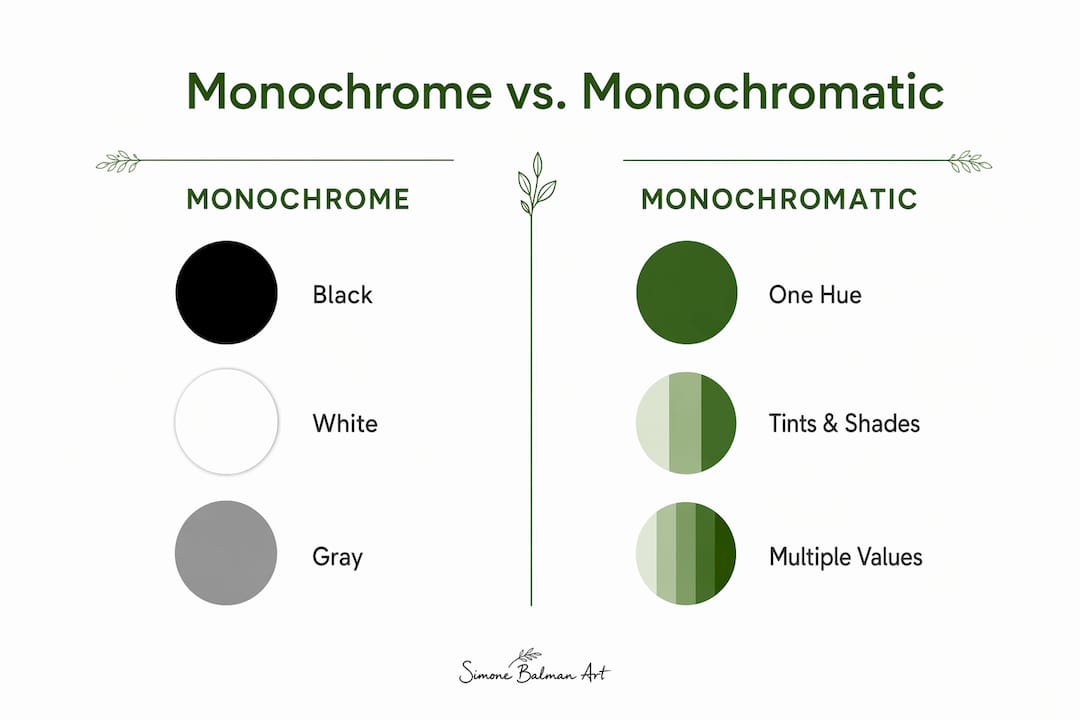
| Feature | Monochrome | Monochromatic |
|---|---|---|
| Color range | Black, white, and gray only | One hue in tints, shades, and tones |
| Primary effect | High contrast, graphic, bold | Harmony, mood, visual cohesion |
| Emotional tone | Dramatic, stark, timeless | Calm, sophisticated, meditative |
| Common uses | Blackwork, silhouette designs | Floral, botanical, portrait work |
| Skill focus | Contrast and form | Value gradation and texture |
In stitching terms, a blackwork sampler is monochrome. A design stitched entirely in shades of navy blue is monochromatic. Both are single-color approaches, but they create very different moods on the fabric.
Which colors work best for monochromatic stitching?
Almost any color family can work, but some lend themselves especially well to this style because they offer a wide natural range of tints and shades.
- Blues are a perennial favorite, from icy pale blue through mid cornflower to deep navy. They evoke calm and focus, making them ideal for meditative stitching projects.
- Greens offer a lush range from mint to hunter green and suit botanical and nature-themed designs beautifully.
- Reds and pinks carry warmth and romance. Historically, single-color red thread on linen was one of the most common approaches in traditional embroidery.
- Neutrals (warm tans, taupes, and creams) create a soft, vintage look that pairs well with natural linen fabric.
- Purples move from lavender to deep plum and carry a sense of elegance and quiet luxury.
Monochromatic palettes evoke moods like tranquility, minimalist sophistication, or meditative focus by reducing visual noise. When you choose your color family, think about the feeling you want the finished piece to carry, then select your thread range to span from light to dark within that family. The broader the value range you use, the more depth and dimension your design will have.
Pro Tip: When selecting threads, lay them out in a line from lightest to darkest before you start stitching. If you can clearly see each step in the progression, your design will read well from a distance.
The artistic challenge of working in a single hue
Monochromatic design is genuinely more demanding than working with multiple colors, and that is part of what makes it so rewarding. When you remove color contrast as a tool, you rely entirely on composition, texture, and value shifting to make a design read clearly. There is nowhere to hide a weak composition.
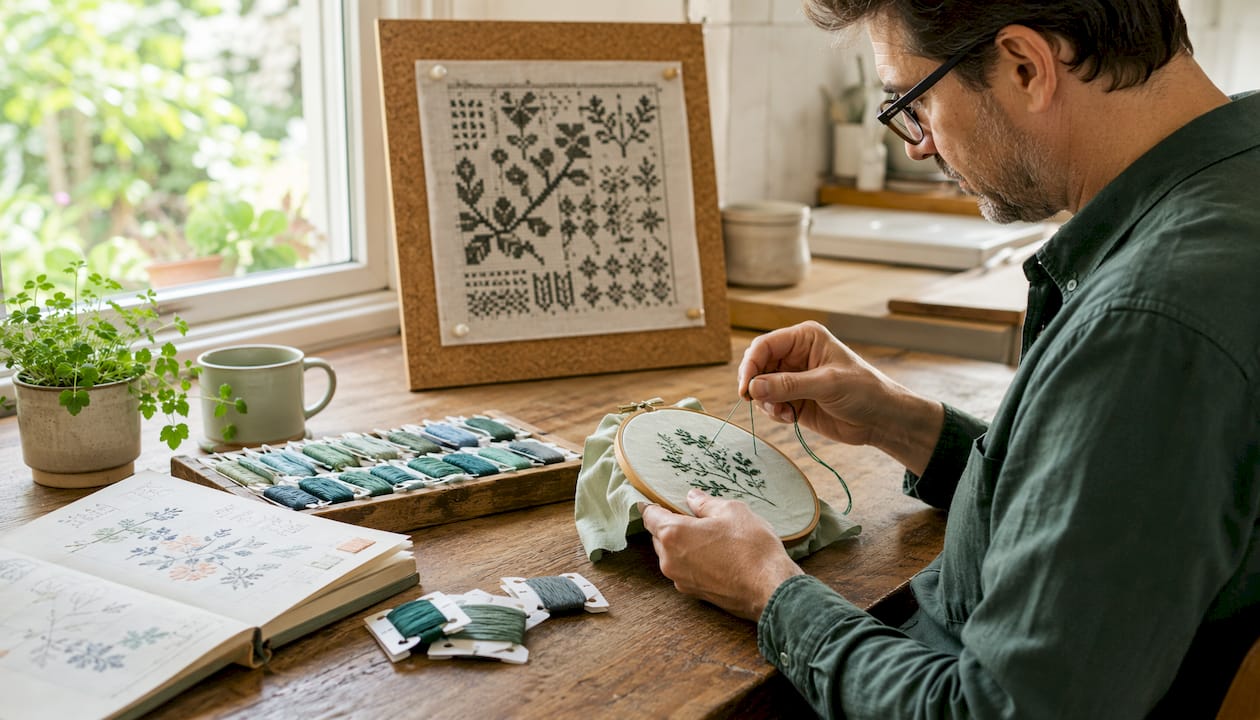
This is where chiaroscuro comes in. Borrowed from painting, chiaroscuro uses light and shadow to define form through contrast rather than color separation. In stitching, you achieve this through careful thread placement, stitch direction, and the interplay of your lightest and darkest values. Stitch tension and texture manipulation define form in the absence of multiple colors, which means your technical precision matters more than ever.
The upside? Artists develop a stronger eye for design structure when working monochromatically. Spending time on single-hue projects sharpens your sense of composition, balance, and light in ways that carry over into every other style you stitch.
Materials and threads for monochromatic stitch designs
Choosing the right materials makes a real difference in how your finished piece looks.
Threads: DMC and Anchor stranded cotton floss are the standard choices. For a monochromatic project, you will typically select five to eight shades within one color family. Silk threads add a natural sheen that enhances value contrast, while matte cotton threads give a softer, more even look. Metallic threads in gold or silver can serve as a tonal accent within a neutral or warm palette.
Fabric: Evenweave fabrics like 28-count evenweave or 32-count linen give you a smooth, consistent ground that lets your thread colors do the work. Natural linen in an ecru or antique white tone is a classic choice for traditional single-color work. For a crisper, more modern look, white or off-white Aida cloth works well.
Needles and hoops: A size 24 or 26 tapestry needle suits most evenweave and Aida projects. A good quality embroidery hoop or scroll frame keeps your tension even, which is especially important in monochromatic work where uneven tension shows more readily.
Techniques that make monochromatic designs work
A few specific approaches help monochromatic stitching really sing.
Value mapping is the most important skill. Before you stitch, assign each area of your design a value (light, mid, or dark) and stick to it. This is what creates the illusion of form and dimension.
Stitch direction adds texture and visual interest. Alternating the angle of your stitches in adjacent sections catches light differently and creates subtle contrast even within the same thread shade.
Fractional stitches (half stitches and quarter stitches) let you soften edges and blend values more gradually, which is particularly useful in portrait and botanical work. You can also explore feather stitch embroidery as a way to add organic texture within a monochromatic palette.
Gradual color transitions rather than hard jumps between values keep the design looking natural. Overlap your thread shades slightly at the boundaries between value areas.
The history behind single-color embroidery
Monochromatic and monochrome embroidery have deep roots across many cultures. Monochrome embroidery historically served as an artistic foundation, emphasizing pattern structure and graphic imagery before polychrome work was introduced. In many traditions, single-color work was not a limitation but a deliberate artistic choice that highlighted the stitcher’s technical mastery.
In Elizabethan England, blackwork embroidery on white linen was a mark of refinement and skill. In Eastern European folk traditions, red thread on white or natural linen carried symbolic meaning in ceremonial textiles. Monochrome embroidery preserves techniques and traditional motifs by focusing on craftsmanship rather than color, keeping ancient pattern structures alive across generations. These traditions remind us that working in a single hue has always been a sign of artistic confidence, not simplicity.
Ready to try a monochromatic project of your own? Simone Balman Art offers a range of patterns that lend themselves beautifully to single-hue stitching, from delicate florals to vintage-inspired designs. Use the free fabric size calculator to plan your next project, or browse the full collection of modern cross stitch patterns to find a design that speaks to you.
Key Takeaways
A monochromatic stitch design uses one hue’s full range of tints, shades, and tones to build depth, dimension, and visual harmony without a second color.
| Point | Details |
|---|---|
| One hue, many values | Tints, shades, and tones of a single color create all the depth and dimension in the design. |
| Monochrome vs. monochromatic | Monochrome uses black, white, and gray; monochromatic uses varied tones of any one color. |
| Best color families | Blues, greens, reds, neutrals, and purples all offer a wide enough value range for strong results. |
| Skill builder | Working monochromatically sharpens composition skills by removing color contrast as a crutch. |
| Deep historical roots | Single-color embroidery traditions span Elizabethan blackwork to Eastern European folk textiles. |
FAQ
What is a monochromatic stitch design?
A monochromatic stitch design uses only one color hue, expanded through its tints, shades, and tones, to create a needlework composition with depth and visual harmony. No second color is introduced; all contrast and dimension come from value variation within that single hue.
What are examples of monochromatic art in stitching?
Common examples include floral designs stitched entirely in shades of pink, botanical patterns in graduated greens, and animal portraits using a range of warm tans or grays. Traditional Elizabethan blackwork and red-on-linen folk embroidery are also classic single-color forms.
What is the difference between monochrome and monochromatic?
Monochrome refers specifically to black, white, and gray, creating contrast through grayscale. Monochromatic means working within one color family of any hue, using its full range of tints, shades, and tones to build harmony and mood.
What colors work best for monochromatic embroidery?
Blues, greens, reds, purples, and warm neutrals all work well because they naturally offer a wide range of light to dark values. The key is choosing threads that span clearly from your lightest tint to your deepest shade within the same color family.
Is monochromatic stitching harder than working with multiple colors?
Yes, it tends to be more technically demanding because you cannot rely on color contrast to define shapes. Success depends on careful value mapping, stitch direction, and precise tension control to create form and dimension through texture alone.


