

Variegated floss is defined as embroidery thread that shifts through two or more colors along a single strand, creating natural, painterly transitions without changing thread mid-project. When you stitch with variegated floss using the right techniques, the results look stunning. When you don’t, you get muddy color blobs or distracting stripes. This guide covers everything you need: how color repeats work, which stitching methods produce the best results, which patterns suit multi-colored floss best, and how to manage your thread for smooth, beautiful color flow.
How does variegated floss differ from solid floss?
Variegated floss cycles through a sequence of colors along its length, while solid floss stays one color from end to end. That color cycling is what makes variegated thread so exciting. It also makes it less predictable.
The key factor to understand is the color repeat length. This is the distance along the thread before the color sequence starts over. Color repeat patterns typically range from 3 to 12 inches, while DMC Coloris has a much longer repeat of approximately 33 inches. A shorter repeat means colors change quickly and frequently across your stitches. A longer repeat, like DMC Coloris, gives you broader sweeps of each color before the next one appears.
This matters because your stitch placement determines which color lands where. If you stitch row by row without thinking about repeat length, colors stack on top of each other and create visible stripes. Understanding your thread’s repeat length before you start lets you plan your approach and avoid that problem.
Here is a quick comparison of how repeat length affects your finished work:
| Repeat length | Color change frequency | Visual effect |
|---|---|---|
| 3–5 inches | Very frequent | Speckled, confetti-like look |
| 6–12 inches | Moderate | Soft color bands |
| 33 inches (DMC Coloris) | Gradual | Broad, sweeping color transitions |
Knowing where your thread sits in its color cycle before you start stitching gives you real control over the final look.
What are the best techniques to stitch with variegated floss?
The traditional row-by-row stitching method causes striping with variegated floss. This happens because each row picks up the same part of the color cycle, stacking identical colors in horizontal bands. The fix is to change how you move across the canvas.
The “jumping around” method
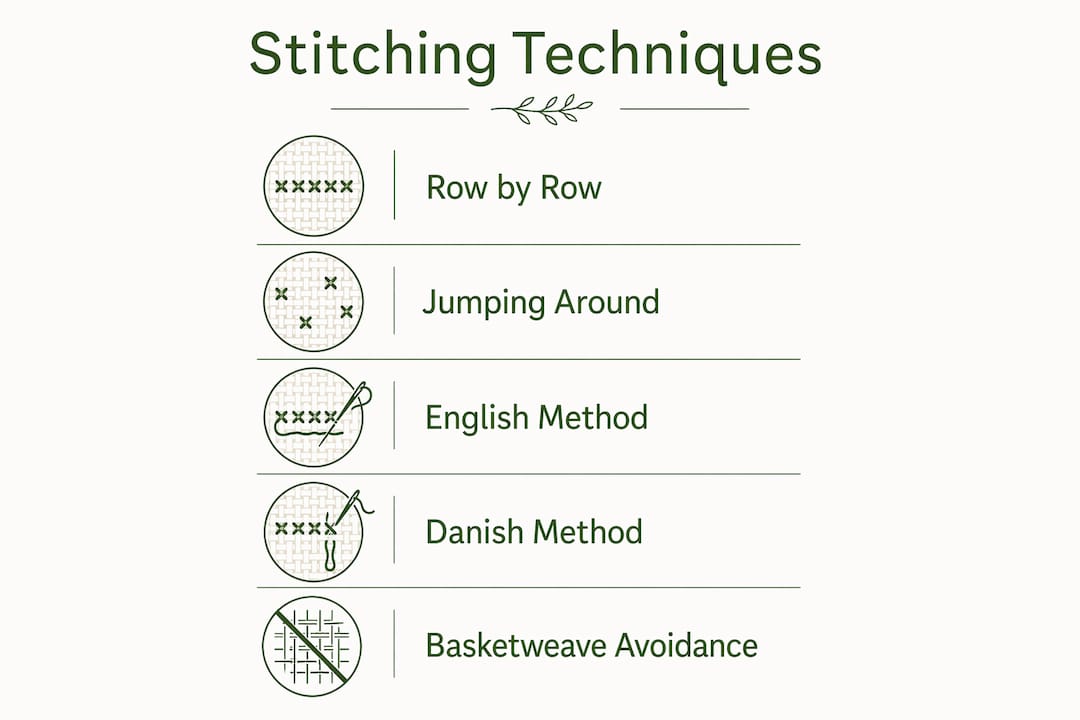
Experts recommend abandoning row stitching in favor of non-sequential stitching, often called “jumping around.” Instead of completing every stitch in one row before moving to the next, you scatter your stitches across the design area. This spreads different color segments across the fabric and breaks up any banding effect. The result looks more natural and organic.
Here is a simple process to follow:
- Thread your needle and complete a stitch in one area of the design.
- Skip to a different area, several rows away, and complete another stitch.
- Continue moving around the design rather than working left to right or top to bottom.
- Return to fill in gaps once the color has shifted to a new segment.
- Step back regularly to check that colors are distributing evenly.
English method vs. Danish method
The English method completes each full cross stitch before moving to the next (bottom left to top right, then top left to bottom right). The Danish method stitches all the bottom half stitches in a row first, then returns to complete the top halves. With variegated floss, the English method gives you more control over where each color lands because you finish each cross before the thread advances. The Danish method can cause color mismatches within a single cross stitch if the thread shifts color mid-row.
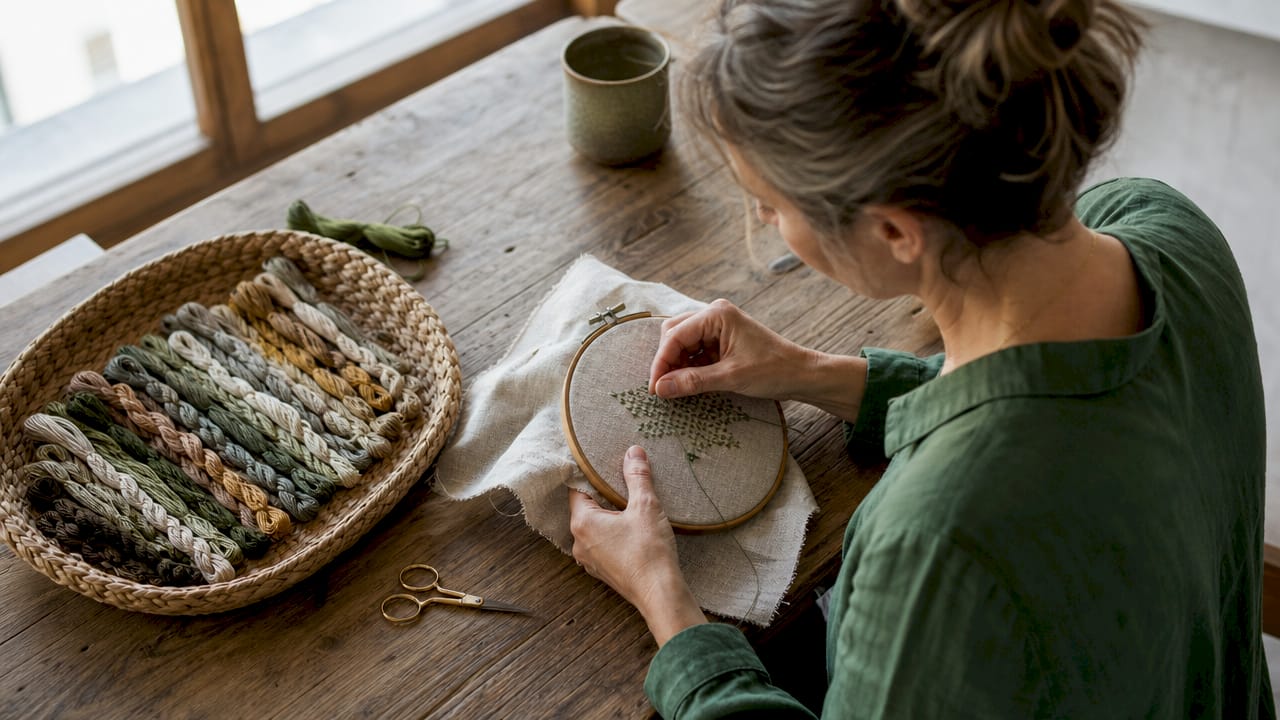
Pro Tip: Vary your stitch direction occasionally. Rotating the angle of your crosses slightly in different sections scatters the color even further and adds a subtle texture that looks intentional rather than accidental.
The basketweave stitch can emphasize diagonal striping because of how the thread flows through the fabric. Avoid it with variegated floss unless you specifically want that diagonal stripe effect. The parking method, where you leave multiple threaded needles parked in the fabric and rotate between them, also works well. It lets you control exactly which color segment is active at any given stitch.
Color pooling can be minimized by varying stitch direction, choosing strategic thread start and end points, and spreading color placement across the design. These three adjustments together give you the most control over the final look.
What patterns work best with variegated floss?
Variegated floss suits simple patterns with large, solid color blocks far better than complex, detailed designs. In an intricate pattern with many small color areas, the shifting thread colors compete with the pattern’s own color changes and the result looks muddled. Large areas let the thread’s natural color journey show off without confusion.
The best pattern types for multi-colored floss include:
- Florals and botanicals. Large petals and leaves give the color room to shift gracefully. A rose stitched in a variegated pink-to-red thread looks like it has natural shading without any extra effort.
- Landscapes and skies. Open sky areas, rolling hills, and ocean scenes suit gradual color transitions beautifully. The Ocean Wave pattern from Simonebalman, for example, works well with blue-green variegated thread across its wide water sections.
- Abstract and geometric designs. Large geometric blocks let you see the full color repeat play out across each shape.
- Seasonal and nature themes. Autumn leaves, sunsets, and watercolor-style designs are natural fits for variegated thread’s organic color shifts.
Avoid patterns with many small, distinct color areas. If a design has 10 different colors in a tight space, adding a variegated thread creates visual noise rather than beauty. Also avoid patterns where outline definition is critical. Fine detail gets lost when the thread color keeps changing.
One smart approach is to use variegated floss for the main focal area and pair it with complementary solid strands for outlines or background. This combination softens the color transitions while keeping the design readable. A solid thread in one of the variegated thread’s core colors works best for this blending technique.
How to manage thread length and color control
Many stitchers pull thread straight from the skein without planning, but controlling thread segments is the key to professional-looking results. A little preparation before you start stitching makes a significant difference.
Here are the core thread management steps:
- Pull a full color repeat before cutting. Pulling a full color repeat before stitching, for example 85 cm, means each new thread you cut starts at the same point in the color cycle. This keeps your color placement consistent across the whole project.
- Reverse half your strands. When using two strands, turning half the strands 180 degrees before reassembling forces the color cycle meeting points to offset each other. This smooths out harsh color jumps and creates more gradual transitions.
- Never change color mid-stitch. Avoid changing thread colors mid-stitch. If the color shifts while you are completing a cross, finish with fresh thread rather than continuing with the old strand. Mid-stitch color changes cause visible tension differences and color mismatches.
- Audit your thread length. Before threading your needle, check that your thread length contains the color sequence you want. Trim sections that fall in an unwanted color if needed. This feels wasteful at first, but it saves you from unpicking later.
- Plan your start and stop points. Starting a new thread at a color you want in a specific area, rather than wherever the skein happens to be, gives you intentional color placement rather than random results.
Pro Tip: Use the floss calculator at Simonebalman before starting any variegated floss project. Knowing your total thread needs upfront helps you cut consistent lengths from the same skein and maintain color repeat continuity throughout.
The table below shows common thread management problems and their fixes:
| Problem | Cause | Fix |
|---|---|---|
| Visible color stripes | Row-by-row stitching | Switch to jumping around method |
| Harsh color jumps | Random thread cutting | Pull full color repeats before cutting |
| Color mismatch within a stitch | Mid-stitch color change | Restart with fresh thread |
| Muddy color blending | Two strands in same color phase | Reverse one strand 180 degrees |
| Unwanted color in focal area | No start point planning | Audit and trim thread before threading |
Key takeaways
Stitching with variegated floss produces beautiful results when you combine non-sequential stitching, full color repeat thread cuts, and pattern designs with large open areas.
| Point | Details |
|---|---|
| Understand color repeats | DMC Coloris repeats at 33 inches; shorter repeats create speckled effects, longer ones create sweeping color bands. |
| Use the jumping around method | Scatter stitches across the design instead of working row by row to avoid color striping. |
| Choose the right patterns | Large color blocks in florals, landscapes, and abstract designs show variegated thread at its best. |
| Pull full color repeats | Cut thread at consistent repeat lengths to keep color placement predictable across the whole project. |
| Reverse one strand | Turning half your strands 180 degrees before threading smooths harsh color transitions. |
What I’ve learned from stitching with variegated floss
When I first started using variegated thread, I expected it to do all the work for me. It doesn’t. My early projects had stripes I didn’t want and color jumps that looked messy rather than artistic. The turning point came when I stopped treating variegated floss like regular thread and started treating it like a design element that needed its own plan.
The biggest shift for me was accepting that some randomness is a feature, not a flaw. Embracing that randomness adds an organic, painterly quality that solid threads simply cannot replicate. No two projects will look exactly the same, and that is genuinely exciting once you stop fighting it.
My honest advice is to start with a simple floral pattern and one skein of variegated thread you love the colors of. Practice the jumping around method on a small piece of fabric before committing to a full project. You will feel the difference immediately. Once you get comfortable with thread management and stitch placement, you will find that variegated floss becomes one of your favorite tools. The learning curve is short, and the joy it brings to your finished work is very real.
— Simone
Patterns and tools to support your variegated floss projects
Ready to put these techniques into practice? Simonebalman has a growing collection of modern cross stitch patterns designed with large, beautiful color areas that are perfect for variegated thread. Designs like the Mediterranean Courtyard pattern feature open sections that let multi-colored floss shine without losing design clarity.
Before you start stitching, use the free fabric size calculator to plan your project dimensions and the thread conversion tool to find the right variegated and solid thread combinations. These free tools take the guesswork out of project planning so you can focus on the fun part: stitching.
FAQ
What is variegated floss stitching?
Variegated floss stitching uses thread that shifts through multiple colors along a single strand to create natural color transitions in embroidery and cross stitch. The technique requires specific methods to control where colors land and avoid unwanted striping.
How do I avoid stripes when using variegated floss?
Abandon row-by-row stitching and use the jumping around method instead, scattering stitches across the design to break up color banding. Varying stitch direction and planning your thread start points also reduces striping.
What is the best variegated thread for cross stitch beginners?
DMC Coloris is a strong starting choice because its approximately 33-inch color repeat gives gradual, easy-to-manage transitions. Longer repeats are more forgiving for beginners learning to control color placement.
Can I mix variegated and solid floss in the same project?
Yes, and it often produces the best results. Use variegated floss for large focal areas and solid thread in a matching color for outlines and fine details to keep the design readable.
How long should I cut variegated floss for stitching?
Cut lengths that include at least one full color repeat, roughly 85 cm for most variegated threads, so each new strand starts at the same point in the color cycle. This keeps color placement consistent throughout your project.


