

Floral cross stitch design is defined as the practice of stitching flower motifs onto fabric using counted cross stitches, following a charted pattern with DMC floss color codes and symbol keys. The best examples of floral cross stitch designs span a wide range, from tiny 6.5 cm wreaths that a beginner can finish in a weekend to full-coverage bouquets with 600 x 400 stitches and 170 distinct colors. Whether you want a quick project for a greeting card or a showpiece for your living room wall, there is a floral pattern sized exactly for your skill and your space.
1. What are examples of floral cross stitch designs for beginners?
Small-scale floral projects are the best starting point for new stitchers. A mini flower wreath measuring just 6.5 cm x 6.5 cm uses a low stitch count, a handful of colors, and a simple grid. You can finish one in a single sitting, which builds confidence fast.
These mini designs teach you the core skills without overwhelming you:
- Low color count. Most beginner florals use 5–10 DMC shades, so you spend less time switching threads.
- Simple symbol charts. A clean color and symbol key lets you follow along without guessing.
- Quick completion. Finishing a project in one or two sessions keeps motivation high.
- Free PDF availability. Many mini floral patterns are available as free, printer-friendly downloads, making them ideal for practice.
The Moonflower Cross Stitch Pattern from Simone Balman Art is a great example of a beginner-friendly floral design. It features a clean chart, a manageable stitch count, and a beautiful result you will actually want to frame.
Pro Tip: Start with a pattern that uses a combined color and symbol chart. You will switch between the two less often, and your eyes will thank you after a long stitching session.
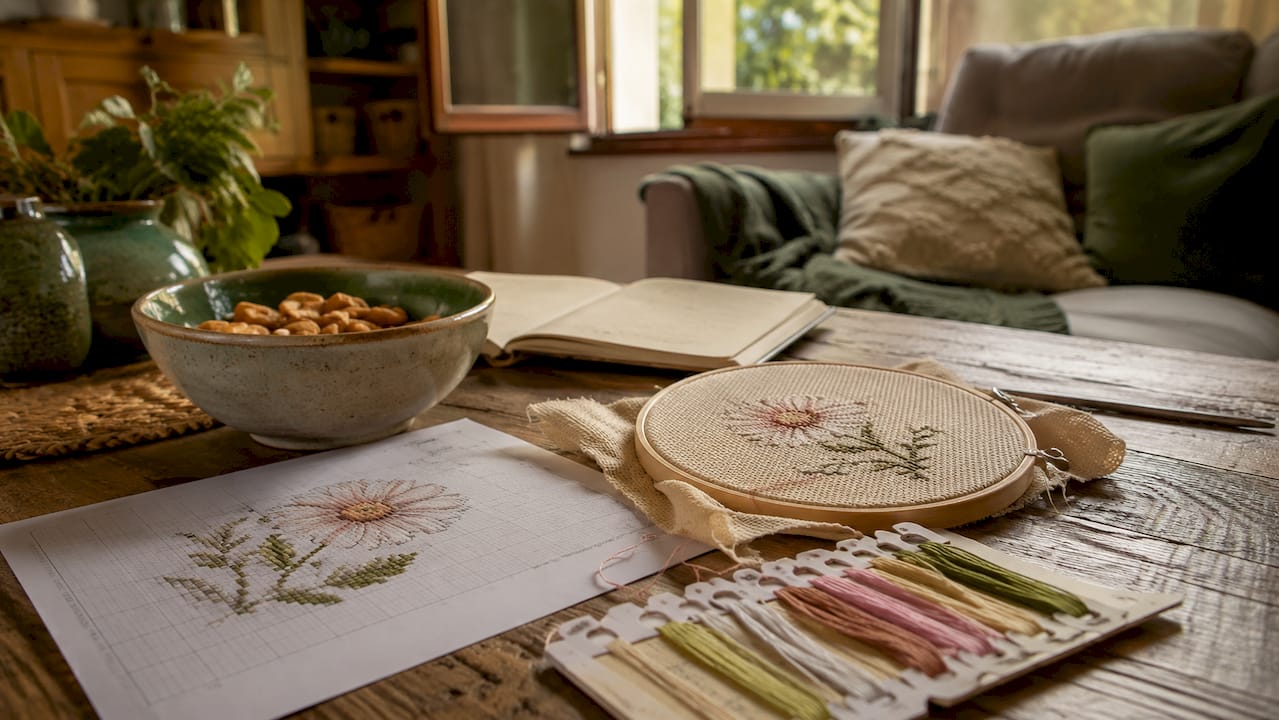
2. Single-stem flower motifs
Single-stem designs are the simplest form of beautiful floral embroidery. A single rose, tulip, or daisy on a plain linen background creates a polished result with minimal effort. These motifs work perfectly on bookmarks, gift tags, and small hoops.
The key advantage is focus. You practice shading and color blending on one flower before committing to a full bouquet. Many stitchers use single-stem motifs to test a new color palette before scaling up to a larger project.
Single-stem patterns also adapt well to home décor. Stitch three matching stems in a row and frame them together for a modern triptych. The Lilac Flowers Cross Stitch Pattern from Simone Balman Art is a perfect example of a single-subject floral that looks stunning in a simple frame.
3. Floral wreath designs
Wreath designs arrange flowers in a circular shape, creating a balanced and decorative composition. They are one of the most popular floral cross stitch patterns because the circular format suits both framed art and embroidery hoop displays.
Difficulty ranges widely within this category. A simple daisy wreath with 8–10 flowers uses fewer than 15 colors. A detailed hollyhock wreath with layered petals and leaf shading can use 25 or more DMC shades.
Wreaths also make excellent gifts. The finished piece looks intentional and decorative without requiring a large frame. Seasonal wreaths with spring blossoms or autumn berries work especially well as year-round home accents.
4. Medium-complexity bouquet designs
Medium-complexity floral patterns are the sweet spot for intermediate stitchers. These designs typically feature recognizable flowers like peonies, lilacs, and hollyhocks arranged in a loose bouquet. They use roughly 20–30 DMC floss colors and include enough detail to feel rewarding without becoming frustrating.
Common features of this category include:
- Clear 10×10 grid markings. Professional charts use these grid lines to prevent counting errors, especially across large color blocks.
- Combined color and symbol keys. These reduce the need to flip between two separate charts.
- Backstitch details. Thin outline stitches define petal edges and add visual crispness to the finished piece.
- Moderate stitch counts. Most medium bouquets fall in the 150 x 150 to 250 x 250 stitch range, making them manageable over a few weeks.
The Folk Art Bouquet Cross Stitch Pattern from Simone Balman Art blends traditional motifs with a modern color palette, making it a strong choice for this skill level.
Pro Tip: Print your chart at full size before you start. Squinting at a small PDF on a tablet mid-stitch is a fast way to make counting errors.
5. Vintage floral cross stitch designs
Vintage floral cross stitch draws from 19th-century sampler traditions, using muted palettes, symmetrical layouts, and botanical accuracy. Think dusty roses, sage greens, and cream backgrounds. The style feels timeless and suits traditional or farmhouse-style interiors.
These patterns often include alphabets, borders, or decorative frames alongside the floral motifs. That combination makes them more complex than a standalone bouquet, but the structured layout actually helps with counting. You always know where you are on the grid.
The Monet Inspired Cross Stitch Pattern from Simone Balman Art captures this aesthetic beautifully. It translates impressionist color blending into counted stitches, giving you a vintage feel with a painterly result.
6. Colorful full-coverage floral designs
Full-coverage floral designs are the most ambitious category in colorful floral needlework. These patterns fill every square of the fabric with stitches, creating a dense, richly colored image. A zinnia bouquet, for example, can feature up to 600 x 400 stitches and use more than 170 distinct DMC colors.
That level of detail produces stunning results. The finished piece looks almost photographic, with smooth color gradients and lifelike flower forms. Digital downloads for this category are typically priced around $15.50–$17.95, reflecting the complexity of the chart design.
Managing a full-coverage pattern requires good organization:
| Challenge | Solution |
|---|---|
| Too many symbols to track | Use a highlighter to mark completed rows on a printed chart |
| Similar floss colors | Rely on symbol charts for high-contrast differentiation |
| Large fabric area | Use a fabric size calculator before cutting |
| Long project timeline | Break the design into 10×10 grid sections and complete one at a time |
Some full-coverage patterns use 139 colors on charts measuring 289 x 300 stitches. That is a serious commitment, but the result is a piece you will display for decades.
7. What features make a quality floral cross stitch pattern chart?
A quality chart is the difference between an enjoyable project and a frustrating one. The best floral cross stitch charts share several technical features that make stitching accurate and fun.
- 10×10 grid markings. These grid lines divide the chart into manageable sections. They prevent the most common beginner mistake: losing your place and stitching an entire section one row off.
- High-contrast symbol charts. When two DMC colors look nearly identical on screen, the symbol chart saves you. Symbol differentiation is the most underrated feature in a professional pattern.
- Combined color and symbol format. This single chart type shows both the color block and the symbol together. You spend less time flipping between pages.
- Backstitch and French knot instructions. These stitches add outlines, flower centers, and fine details that make a floral design look finished rather than flat.
- Clear DMC color codes. Every thread listed should include the full DMC number so you can shop or substitute with confidence using a DMC color matching tool.
Pro Tip: Always check whether your pattern includes a symbol chart before you buy. A color-only chart is fine for simple designs, but any pattern with more than 15 colors needs symbols to be stitchable without constant mistakes.
8. How to choose floral designs based on your project goals
Matching a floral design to your project goal saves time and produces better results. A pattern that looks beautiful online can be the wrong choice if it does not fit your frame, your skill level, or your room.
Ask yourself these questions before you choose:
- What is the finished size? Use a pattern size calculator to convert stitch count and fabric count into finished dimensions. A 300 x 300 stitch design on 28-count evenweave finishes at about 27 cm square.
- How much time do you have? A beginner-friendly mini wreath takes a weekend. A full-coverage bouquet can take several months of regular stitching.
- What is the end use? Pillows need durable fabric and simple designs that survive washing. Framed wall art can handle finer fabric and more complex stitching.
- What is your room’s color palette? Choose floral colors that complement your existing décor. Soft lavenders and blush pinks suit a bedroom. Bold zinnias and sunflowers work in a kitchen or studio.
- What skill level are you comfortable with? Be honest. A pattern that is too complex will sit unfinished in a drawer. Choose one level above your current skill, not three.
The Monet Sunflowers Inspired Cross Stitch Pattern from Simone Balman Art is a strong example of a design that suits multiple skill levels and décor styles, with bold colors that work in almost any room.
9. Easy cross stitch flowers for quick gifts
Easy cross stitch flowers are the most practical category for crafters who want a finished piece fast. Small pansy clusters, simple daisies, and two-color tulips all stitch up in a few hours. They make excellent gifts because the recipient sees real skill and care, even though the project took minimal time.
The trick is choosing a design with clean lines and limited color changes. A five-petal flower in three shades of pink with a yellow center is both quick and beautiful. Stitch it on a small piece of linen, back it with felt, and you have a handmade gift card or ornament.
These designs also work well for teaching children or new stitchers. The short completion time keeps attention and enthusiasm high.
10. Seasonal and themed floral collections
Seasonal floral collections give you a reason to stitch all year. Spring cherry blossoms, summer sunflowers, autumn dahlias, and winter holly berries each offer a distinct color palette and mood. Stitching a set of four seasonal pieces and rotating them on your wall is a satisfying long-term project.
Themed collections also work well as gifts. A set of four small spring florals framed together makes a more impressive gift than a single large piece, and each individual design is manageable on its own. Adapting traditional floral motifs into seasonal themes keeps the craft feeling fresh while honoring its heritage.
Key Takeaways
The best floral cross stitch designs match your skill level, project goal, and color palette before you buy the pattern.
| Point | Details |
|---|---|
| Start small to build skills | Mini wreaths and single-stem designs finish fast and teach core techniques. |
| Use symbol charts for accuracy | High-contrast symbols prevent color mix-ups in patterns with 15 or more DMC shades. |
| Match stitch count to fabric count | Always calculate finished size before cutting fabric using a pattern size calculator. |
| Full-coverage designs need planning | Organize large floral charts by 10×10 grid sections to avoid counting errors. |
| Seasonal collections extend enjoyment | Rotating themed florals through the year gives you a reason to keep stitching. |
Why I think most crafters choose the wrong floral pattern first
After years of designing floral cross stitch patterns, the most common mistake I see is choosing a design based on the finished photo rather than the chart. A gorgeous peony bouquet looks irresistible on a product page. But if the chart has 80 symbols, no grid markings, and a color-only key, you will spend more time frustrated than stitching.
My honest advice: read the chart before you commit. Count the colors. Check for 10×10 grid lines. Look for a symbol chart. These details matter far more than the preview image.
Needleworker Valentyna Tkachuk makes a point I fully agree with: adapting traditional florals for modern crafters is not about simplifying them. It is about making them readable. A well-designed chart respects both the art and the stitcher.
The designs I am most proud of at Simone Balman Art are the ones where stitchers tell me they never had to guess. The chart was clear, the colors were distinct, and the process felt like joy rather than work. That is the standard every floral pattern should meet.
— Simone
Floral patterns and tools from Simone Balman Art
Simone Balman Art offers a growing collection of floral cross stitch patterns for every skill level, from quick single-stem designs to detailed full-coverage bouquets. Every pattern includes a clear chart, a combined color and symbol key, and DMC floss codes so you can start stitching with confidence.
Planning your project is just as important as choosing your pattern. The free fabric size calculator and pattern size calculator at Simone Balman Art help you calculate finished dimensions and fabric requirements before you cut a single thread. Browse the full pattern shop to find your next floral project, whether you want something quick for a weekend or a showpiece that takes months to complete.
FAQ
What is a floral cross stitch design?
A floral cross stitch design is an embroidery pattern that uses counted cross stitches to create flower motifs on fabric, following a chart with DMC color codes and symbol keys. Designs range from simple single-stem flowers to complex full-coverage bouquets.
How many DMC colors do floral cross stitch patterns typically use?
Beginner floral patterns use 5–10 DMC colors, while medium-complexity bouquets use 20–30 shades. Advanced full-coverage designs can use up to 170 distinct DMC colors.
What size fabric do I need for a floral cross stitch pattern?
Fabric size depends on the stitch count and the fabric count (threads per inch). A pattern size calculator converts these two numbers into finished dimensions, so you know exactly how much fabric to buy before you start.
Are there free floral cross stitch patterns available?
Many beginner-friendly floral patterns, including mini flower wreaths, are available as free PDF downloads with color and symbol coding. These are ideal for practice and skill building.
What stitches are used in floral cross stitch designs?
Floral cross stitch patterns primarily use full cross stitches for color blocks, with backstitch for outlines and petal edges, and French knots for flower centers and fine texture details.


