

Cross stitch is a counted needlework technique that uses uniform X-shaped stitches on grid-based Aida or even-weave fabric, while embroidery is a broader craft that uses many stitch types on diverse fabrics to create free-form designs. Understanding the cross stitch vs embroidery differences helps you choose the right technique before you buy a single skein of floss. Both crafts share roots in textile art, but they feel and look very different in practice. This guide breaks down the technical, visual, and practical distinctions so you can pick the one that fits your creative style.
What are the fundamental technical differences between cross stitch and embroidery?
Cross stitch relies on one stitch: the X-shaped cross stitch, placed precisely within the holes of a woven grid fabric. Embroidery, by contrast, uses dozens of stitch types including French knots, satin stitch, chain stitch, stem stitch, and running stitch. That single-stitch focus is what makes cross stitch so approachable for beginners.
Fabric choices
Cross stitch works almost exclusively on Aida cloth or even-weave linen, both of which have a visible grid of holes. That grid tells you exactly where each stitch goes. Embroidery works on cotton, silk, linen, denim, and even velvet, with no grid required. You can learn more about choosing cross stitch fabric before starting your first project.
Needle types
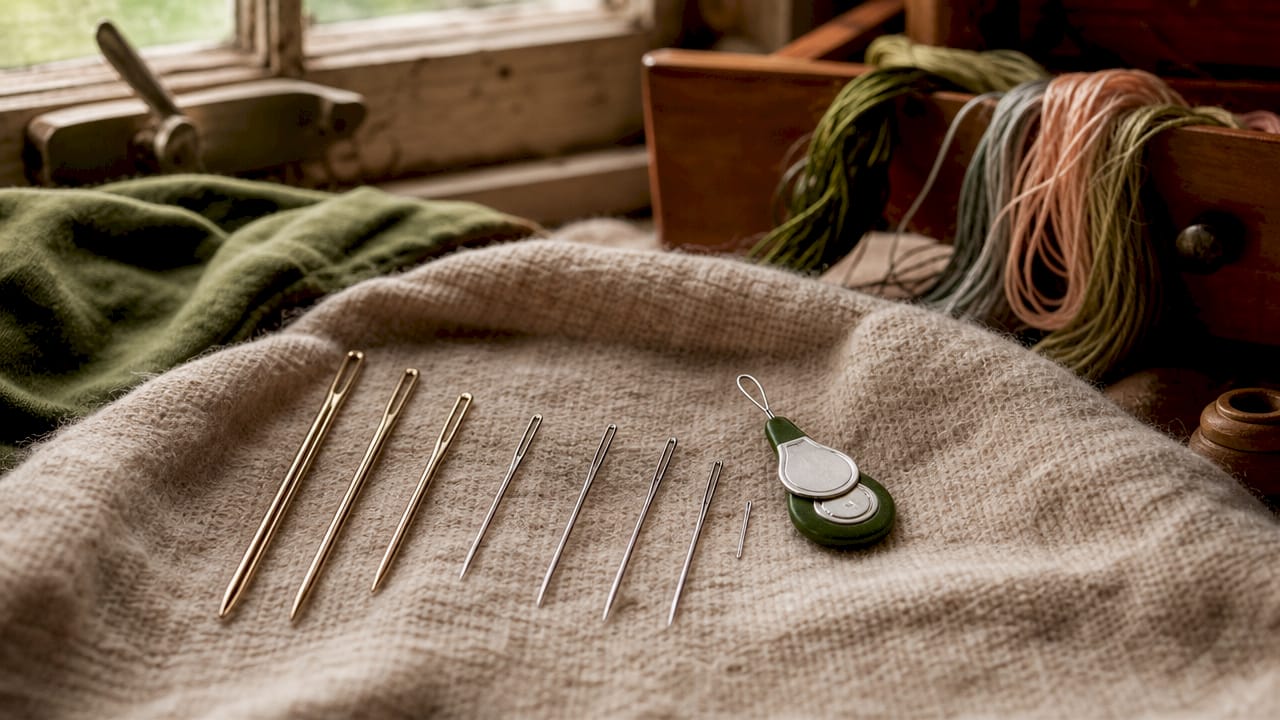
Cross stitch uses blunt tapestry needles that slide through the fabric holes without piercing the threads. Embroidery uses sharp needles that pierce directly through the fabric surface. Using a sharp needle on Aida cloth risks splitting the fabric threads and distorting the grid, which ruins the clean look of your stitches.
Thread and materials
Both crafts commonly use six-strand cotton embroidery floss. The difference is that embroidery can also incorporate wool, silk ribbon, and yarn to create varied textures and dimensional effects. Cross stitch stays closer to flat, uniform thread coverage. That material variety is one reason embroidery feels more open-ended as a craft.
- Cross stitch materials: Aida or even-weave fabric, blunt tapestry needle, six-strand cotton floss
- Embroidery materials: Cotton, silk, linen, or denim fabric; sharp needle; floss, wool, ribbon, or yarn
- Shared tools: Embroidery hoop, scissors, needle threader
Pro Tip: Use a floss calculator before starting any project. Knowing your thread needs upfront saves you from running out mid-stitch.
How do the aesthetics and design approaches differ?
Cross stitch creates a pixelated, geometric look because every stitch sits on a grid. Embroidery produces painterly, textured, and sometimes three-dimensional designs. The visual difference is immediately obvious when you hold finished pieces side by side.
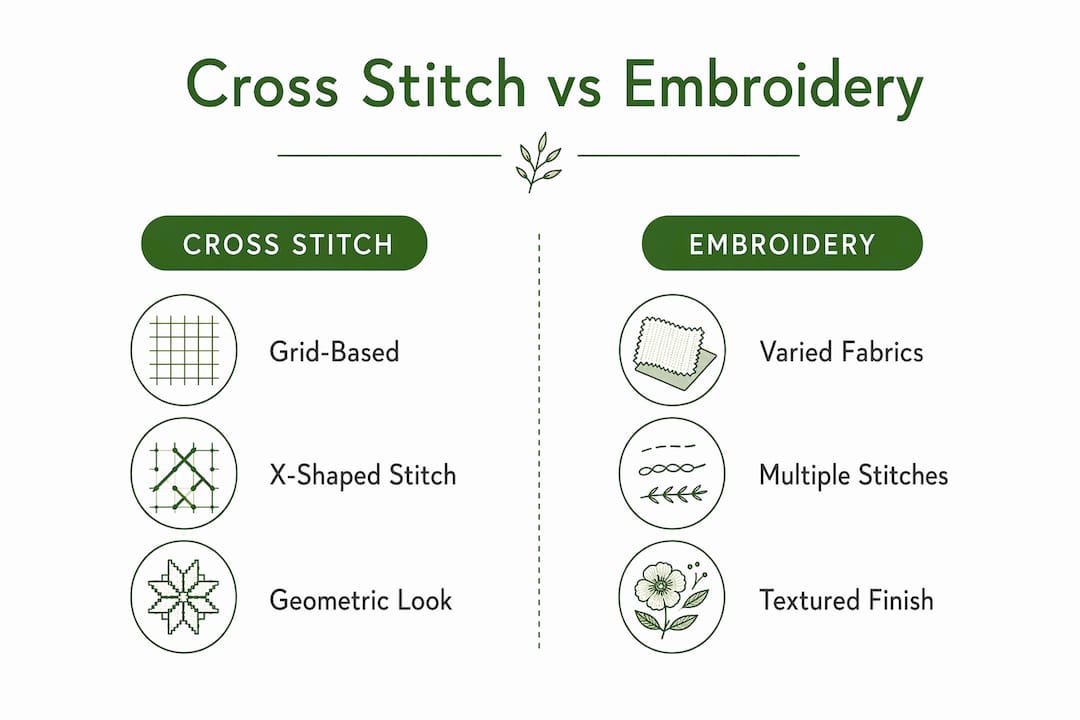
Cross stitch is favored for typography and geometric motifs, where the grid structure actually becomes part of the design’s charm. Embroidery shines in florals, portrait work, and visible mending, where organic curves and layered textures matter. Neither style is better. They simply serve different creative goals.
| Feature | Cross stitch | Embroidery |
|---|---|---|
| Visual style | Pixelated, geometric, grid-aligned | Painterly, organic, textured |
| Design source | Counted chart grid | Line drawing or freehand |
| Stitch variety | Primarily one stitch type | Dozens of stitch types |
| Texture | Flat and uniform | Dimensional and varied |
| Best for | Typography, geometric art, pixel-style images | Florals, garments, mending, complex art |
Embroidery’s free-form design allows improvisation and varying textures in ways that counted cross stitch cannot. A cross stitch pattern follows a precise chart, stitch by stitch. An embroidery design can be transferred from a line drawing and then interpreted freely by the stitcher. That interpretive freedom is what draws many artists to embroidery.
Surface embroidery often appears more textured and three-dimensional than cross stitch because of stitches like herringbone, pinwheel rose, and raised satin stitch. Cross stitch stays flat by design. If you want your finished piece to have tactile depth, embroidery gives you far more options.
What is the learning curve for beginners?
Cross stitch is easier to pick up because you only need to master one stitch. Embroidery requires learning multiple techniques, but the good news is that focusing on 3–5 core stitches initially, such as running stitch, back stitch, satin stitch, French knot, and stem stitch, produces beautiful results without overwhelming you.
Where cross stitch gets tricky
Cross stitch demands counting and precision. A single early placement error can ripple through an entire project, forcing you to unpick many rows of work. The mental shift from freehand crafts to counted stitching is real. Many beginners underestimate how much concentration counted work requires.
One technique worth learning early is railroading. Railroading in cross stitch means guiding your needle between the two strands of floss as you pull through, keeping them flat and parallel. This gives your stitches a clean, professional finish. It matters less in embroidery, where texture and variation are part of the style.
Where embroidery is more forgiving
Embroidery is more forgiving for stitch placement and artistic choices. If a French knot lands slightly off, it often looks intentional. That flexibility makes embroidery feel less stressful for creative stitchers who prefer to work intuitively rather than follow a grid.
- Cross stitch beginner advantages: One stitch to learn, clear chart to follow, structured progress
- Cross stitch beginner challenges: Counting errors, precision required, railroading technique
- Embroidery beginner advantages: Creative freedom, forgiving placement, varied stitch effects
- Embroidery beginner challenges: More techniques to learn, less structured guidance
Starter kits for both crafts range from $10 to $30, making either a low-risk entry point. The real investment is time, not money. Cross stitch kits typically include Aida cloth, a tapestry needle, and pre-sorted floss. Embroidery kits include fabric, a sharp needle, a hoop, and a printed design transfer.
Pro Tip: If you are unsure which needle to use, Simonebalman has a dedicated guide on selecting the correct needle that covers both tapestry and sharp needle types.
How do project types and practical applications vary?
Cross stitch and embroidery suit different creative goals. Knowing which projects each technique handles best saves you frustration and wasted materials.
- Framed wall art. Cross stitch excels here. The grid-based structure produces clean, repeatable designs that look polished in a frame. Pixel-style portraits, quotes, and geometric patterns are natural fits.
- Garment decoration. Embroidery wins for clothing. Sharp needles pierce denim, cotton shirts, and linen jackets cleanly. Stitches like chain stitch and satin stitch create smooth, curved lines that follow the shape of a collar or pocket.
- Visible mending. Embroidery is the standard choice for mending worn fabric with decorative stitches. Running stitch and sashiko-style patterns reinforce fabric while adding visual interest.
- Greeting cards and small gifts. Both techniques work well for small-scale projects. Cross stitch on perforated paper produces charming cards. Embroidery hoops make quick, frameable gifts.
- Large, complex artwork. Cross stitch handles large projects well because the chart keeps you organized across thousands of stitches. Embroidery at large scale requires more planning and freehand skill.
Cross stitch is slower due to counted stitches but suits meditative, repetitive stitching sessions well. Embroidery offers quicker surface coverage and more creative spontaneity. Both crafts are highly portable. A small hoop, a few skeins of floss, and a needle fit easily into a bag for stitching on the go.
The fabric size calculator at Simonebalman helps you plan cross stitch projects accurately before cutting your fabric. Getting the fabric size right at the start prevents one of the most common beginner mistakes.
Key takeaways
Cross stitch is a specialized, counted form of embroidery that uses one stitch on grid fabric, while embroidery is a broader craft offering many stitch types, fabrics, and creative freedom.
| Point | Details |
|---|---|
| Core stitch difference | Cross stitch uses only the X-shaped stitch; embroidery uses dozens of stitch types. |
| Fabric and needle | Cross stitch needs Aida cloth and a blunt tapestry needle; embroidery uses varied fabrics and sharp needles. |
| Beginner ease | Cross stitch has one stitch to learn but demands counting precision; embroidery is more forgiving creatively. |
| Visual outcome | Cross stitch produces flat, pixelated designs; embroidery creates textured, dimensional artwork. |
| Project fit | Cross stitch suits structured, geometric projects; embroidery suits garments, florals, and expressive art. |
Which technique is right for you? My honest perspective
I have stitched both, and the honest truth is that your personality matters more than the technique. If you enjoy following a clear plan and watching a design emerge stitch by stitch, cross stitch will feel deeply satisfying. The counting is meditative once you settle into it. If you prefer to improvise and let the design evolve as you go, embroidery gives you that freedom.
The biggest mistake I see beginners make is treating the two crafts as interchangeable. They are not. Picking up an embroidery needle and trying to work a cross stitch chart on regular cotton fabric leads to frustration fast. The grid matters. The needle matters. Starting with the right materials for your chosen technique makes the whole experience more enjoyable.
My advice: if you are drawn to pixel-style art, quotes, or geometric patterns, start with cross stitch. If you want to stitch flowers on a jacket or mend a favorite pair of jeans with decorative stitches, start with embroidery. You can always learn the other craft later. Many stitchers love both, and the skills do transfer in useful ways.
One thing I feel strongly about is not letting the learning curve put you off. Cross stitch counting feels intimidating until it clicks, usually within your first small project. Embroidery stitch variety feels overwhelming until you realize that three or four stitches cover most designs beautifully. Give yourself permission to be a beginner, and enjoy the process.
— Simone
Plan your next stitching project with Simonebalman
Ready to put your new knowledge to work? Simonebalman offers a full set of free tools to help you plan any cross stitch project with confidence.
The fabric size calculator tells you exactly how much Aida cloth you need before you cut a single thread. The pattern size calculator helps you scale any design to your chosen fabric count. If you are looking for design inspiration, the modern cross stitch pattern shop features florals, animals, travel scenes, ocean themes, and seasonal designs, all with clear charts and beautiful artwork. Whether you are stitching your very first piece or planning something ambitious, Simonebalman has the tools and patterns to support you every step of the way.
FAQ
What is the main difference between cross stitch and embroidery?
Cross stitch is a counted-thread technique that uses only the X-shaped stitch on grid-based Aida fabric. Embroidery is a broader category that includes many stitch types on diverse fabrics, with no grid required.
Is cross stitch easier than embroidery for beginners?
Cross stitch is generally easier to start because you only master one stitch. Embroidery requires learning multiple techniques, though focusing on 3–5 core stitches produces great results quickly.
Can you use embroidery floss for cross stitch?
Yes. Both crafts use six-strand cotton embroidery floss as their primary thread. Cross stitch typically uses 2 strands on 14-count Aida, while embroidery strand count varies by stitch and desired coverage.
What fabric do you use for cross stitch vs embroidery?
Cross stitch requires Aida cloth or even-weave linen with a visible grid. Embroidery works on almost any fabric, including cotton, silk, linen, and denim, with no grid needed.
Is cross stitch a type of embroidery?
Yes. Cross stitch is a specialized subset of embroidery, specifically a counted-thread technique. All cross stitch is embroidery, but not all embroidery is cross stitch.


