

A between needle is defined as a short, fine, sharp needle originally designed for quilting, though it also serves specific hand embroidery tasks that demand precision and control. If you have searched for “what is a between needle embroidery,” you are likely trying to sort out a genuinely confusing corner of the needle world. The term gets used loosely online, and that creates real confusion about which needle does what. This guide clears that up, explains how betweens differ from crewel and tapestry needles, and shows you exactly when reaching for one makes sense.
What is a between needle in embroidery?
A between needle is short, fine, and sharp, with a compact length noticeably shorter than a standard sharp or crewel needle. That compact body is its defining trait. It gives you more control over each stitch because your fingers stay closer to the fabric surface.
Betweens are not a specific embroidery technique. They are a needle type. The name “between” comes from their size sitting between a sharp and a milliner needle in the traditional needle classification system. The Embroiderers’ Guild of America recognizes betweens as primarily quilting needles that also appear in specialized embroidery applications like fine appliqué and shadow work.
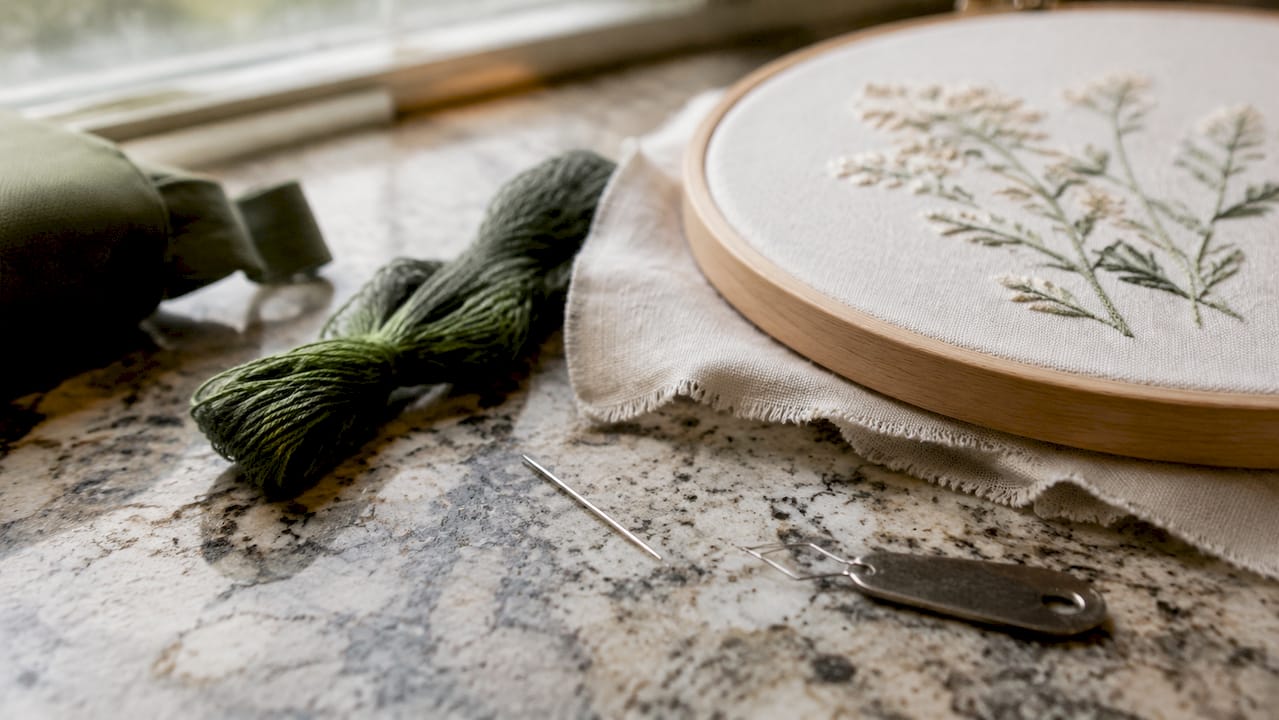
The needle has a round eye, which is smaller than the elongated eye found on most embroidery or crewel needles. That round eye limits how many thread strands you can pass through it comfortably. For most standard surface embroidery with multiple strands of DMC floss, a crewel needle is the better fit. Betweens shine when you need a short, rigid tool for tight, controlled stitching.
How does a between needle differ from other embroidery needles?
Understanding the differences between needle types saves you from frustrating stitching sessions. The three needles you will encounter most often are crewel needles, tapestry needles, and betweens. Each has a distinct physical design built for a specific job.
| Needle type | Tip | Length | Eye shape | Best use |
|---|---|---|---|---|
| Crewel (embroidery) | Sharp | Medium | Long, oval | Surface embroidery, wool, floss |
| Tapestry | Blunt | Medium to long | Large, oval | Counted-thread work, canvas |
| Between (quilting) | Sharp | Short | Small, round | Quilting, fine detail, appliqué |
| Milliner (straw) | Sharp | Long | Round | Bullion knots, smocking |
Tapestry needles have blunt tips designed to slide between fabric threads without piercing them. That is the correct needle for counted-thread embroidery like cross stitch and needlepoint. Betweens, by contrast, are sharp. They pierce fabric cleanly, which is exactly what quilting through multiple layers requires.
Crewel needles sit in the middle. They are sharp like betweens but longer, with a larger oval eye that holds multiple thread strands easily. Most surface embroidery stitches, from satin stitch to stem stitch, work best on a crewel needle because the longer shaft gives you more flexibility in your hand movements.
Pro Tip: Hold a between needle and a crewel needle side by side. The between will feel noticeably stubbier. If it feels awkward in your hand for standard embroidery, that is normal. It is built for a different grip and a different motion.
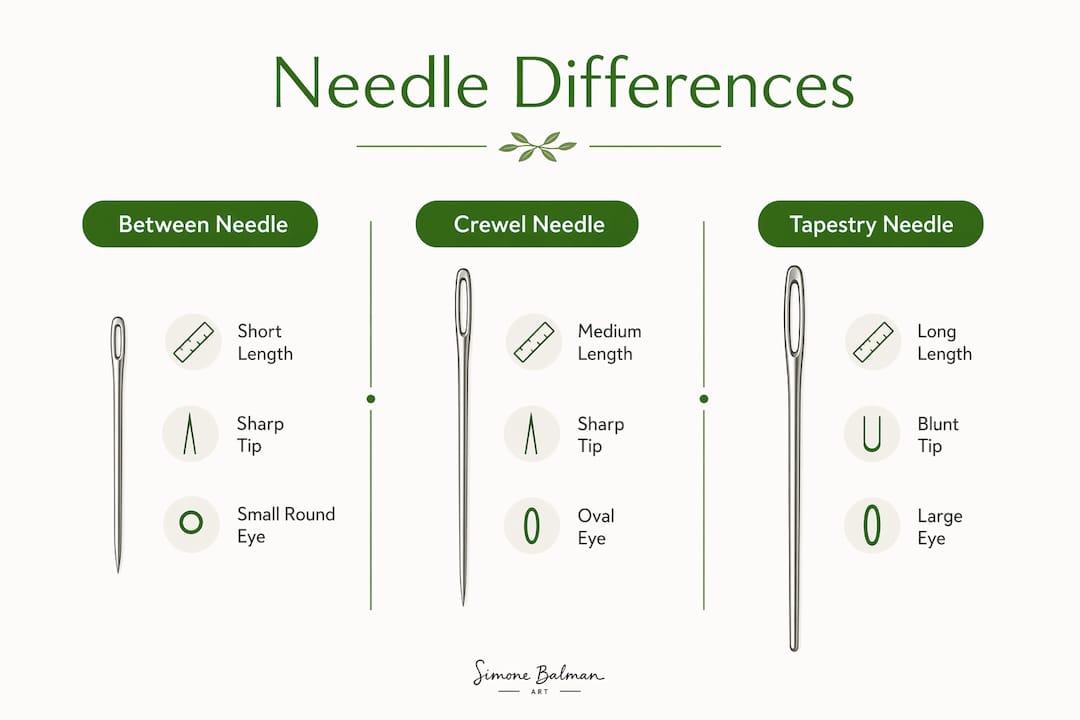
The key distinction to remember: betweens pierce fabric with a sharp tip and a short shaft, tapestry needles pass between threads with a blunt tip, and crewel needles pierce fabric with a longer, more flexible shaft. Choosing the wrong type does not just feel uncomfortable. It can damage delicate fabric weave or cause thread to fray.
How and when to use a between needle for embroidery projects
Betweens work best in situations where a shorter needle gives you a real advantage. Here are the embroidery contexts where they genuinely earn their place:
- Shadow work embroidery: Shadow work involves stitching on the reverse of sheer fabric so the thread color shows through softly from the front. The short, rigid shaft of a between resists bending through dense fabric, keeping your stitches even and controlled on delicate sheers.
- Fine appliqué: Attaching small fabric pieces with tiny slip stitches calls for a short needle. Betweens let you take quick, shallow bites of fabric without the needle flopping around.
- Quilting through layers: This is the between’s home territory. Stitching through a quilt top, batting, and backing requires a needle that pushes through multiple layers without bending.
- Detailed finishing work: Tiny hem stitches or securing thread ends in tight spaces benefit from the between’s compact size.
Standard surface embroidery, including satin stitch, French knots, and chain stitch on open-weave linen, does not typically call for a between. The short length can actually make those stitches harder to execute because you lose the natural rocking motion that longer needles allow.
Thread compatibility matters a lot with betweens. The round eye is smaller than on crewel needles, so thick thread or multiple strands will not pass through cleanly. Stick to one or two strands of standard embroidery floss, fine silk thread, or quilting thread when working with betweens.
Pro Tip: Use a one-wrap quilter’s knot when starting with a between needle. It creates a small, tight knot that pulls cleanly through fabric without leaving a visible bump, which matters especially on fine or sheer materials.
Fabric choice also plays a role. Betweens work well on tightly woven cotton, fine linen, and silk. They are less suited to loosely woven evenweave or Aida cloth, where a tapestry needle’s blunt tip is the right call for counted-thread techniques.
Common misconceptions about between needles and embroidery
The confusion around betweens is real, and it trips up a lot of crafters. Here are the most common misunderstandings worth clearing up:
- “Between needle embroidery” is a technique. It is not. The phrase describes using a between needle in an embroidery context, not a named stitch method. The needle is the tool, not the technique.
- Betweens and tapestry needles do the same job. They do not. Tapestry needles are blunt and designed to pass between fabric threads in counted-thread work. Betweens are sharp and designed to pierce fabric for quilting and fine detail stitching.
- A between is just a small crewel needle. The length difference is significant. A crewel needle’s longer shaft creates a different stitching motion. Swapping one for the other mid-project will change how your stitches feel and look.
- Any sharp needle works for shadow work. Needle rigidity matters. The between’s short shaft resists bending when you push through sheer fabric, which keeps your stitches consistent. A longer needle flexes more and can throw off your stitch tension.
The Embroiderers’ Guild of America recommends matching needle tip type to fabric weave as the first decision in needle selection, before considering thread type or stitch style. That single principle resolves most needle confusion. Sharp tip for piercing fabric, blunt tip for passing between threads.
Terminology also varies by region. In some crafting communities, “working between the threads” refers to the tapestry needle technique in counted-thread embroidery, not to betweens as a needle type. Knowing both meanings prevents you from buying the wrong needle based on a forum post.
Selecting the right needle size and thread pairing
Needle sizing follows a counterintuitive scale. Higher numbers mean finer, thinner needles. A size 12 between is much finer than a size 7. This trips up beginners who assume larger numbers mean larger needles.
| Needle size | Fabric weight | Thread type |
|---|---|---|
| 7–8 | Medium cotton, standard linen | Single strand floss, quilting thread |
| 9–10 | Fine cotton, lightweight linen | Single strand silk, fine quilting thread |
| 11–12 | Sheer fabric, high-count cotton | Very fine silk, single strand specialty thread |
For most embroidery with between needles, sizes 8–10 cover the majority of projects. Size 7 works for slightly heavier fabrics or thicker single-strand threads. Size 12 is reserved for very fine, sheer work where any visible needle hole would ruin the piece.
Thread should pass through the eye with minimal resistance. If you have to force it, the eye is too small and the thread will fray or snap during stitching. If the thread slides through loosely with visible gaps, the eye is too large and your stitches will lack tension.
A simple test works well here. Thread the needle and pull the thread back and forth through the eye a few times. Smooth movement with light resistance means a good match. Catching or fraying means you need a different size. Getting this right protects both your thread and your fabric, especially on delicate projects where eye-to-thread ratio directly affects stitch quality.
Key Takeaways
A between needle is a short, sharp quilting needle that also excels at fine embroidery tasks like shadow work and appliqué, but it is not a substitute for crewel or tapestry needles in standard surface or counted-thread embroidery.
| Point | Details |
|---|---|
| Betweens are quilting needles | Short, sharp, and rigid, they are built for quilting but work well for fine embroidery detail. |
| Not a technique, a tool | “Between needle embroidery” describes using this needle type, not a named stitch method. |
| Tip type drives needle choice | Sharp tips pierce fabric; blunt tapestry tips pass between threads. Match tip to technique first. |
| Size scale is counterintuitive | Higher needle numbers mean finer needles; size 12 is thinner than size 7. |
| Thread must match the eye | Thread should pass through the round eye with light resistance to prevent fraying or breakage. |
My honest take on between needles after years of stitching
I spent a long time avoiding betweens because they felt awkward. Coming from surface embroidery with crewel needles, the short shaft felt stubby and hard to control. What changed my mind was shadow work on organza. Nothing else gave me the same level of stitch consistency on that slippery, delicate fabric.
The mistake I see most often is crafters grabbing a between because someone online said it is “good for embroidery,” then getting frustrated when it does not feel right for their satin stitch sampler. Betweens are not general-purpose embroidery needles. They are specialists. Use them for the right job and they are genuinely wonderful. Use them for the wrong job and you will wonder why embroidery feels so hard.
My advice: keep a small pack of size 9 betweens alongside your regular crewel needles. Pull them out specifically for fine appliqué, shadow work, or any project where you need short, tight stitches on dense or delicate fabric. You do not need to choose between needle types. You need both, used intentionally.
The other thing worth saying: do not stress about getting it perfect from the start. Needle choice is something you feel your way into with practice. Try a between on a small test piece before committing to a full project. That single habit will save you a lot of unpicking.
— Simone
Needle guides and patterns at Simone Balman Art
Knowing your needle type is only the first step. Putting that knowledge to work on a project you love is where the real joy starts.
Simone Balman Art offers a free needle selection guide that walks you through choosing the right needle for counted-thread and surface embroidery projects, including when betweens make sense. The shop also carries a wide range of modern cross stitch patterns designed for stitchers at every level, from quick beginner pieces to detailed designs that reward careful needle and thread choices. Whether you are working on your first shadow work piece or planning a larger counted-thread project, the free tools and pattern collection at Simone Balman Art give you a solid starting point.
FAQ
What is a between needle used for in embroidery?
A between needle is primarily a quilting needle, but it also works well for fine embroidery tasks like shadow work and appliqué. Its short, rigid shaft gives you extra control when stitching through dense or delicate fabric.
How does a between needle differ from a tapestry needle?
Betweens have sharp tips for piercing fabric, while tapestry needles have blunt tips designed to pass between fabric threads in counted-thread embroidery. They serve completely different functions and are not interchangeable.
What size between needle should I use for embroidery?
Sizes 8–10 suit most fine embroidery tasks with between needles. Higher numbers indicate finer needles, so choose size 11–12 for sheer or very high-count fabrics.
Can I use a between needle for cross stitch?
Cross stitch uses evenweave or Aida fabric and requires a blunt tapestry needle to pass between fabric threads without piercing them. A between needle’s sharp tip is not the right choice for standard cross stitch work.
Why does my thread keep fraying with a between needle?
Fraying usually means the needle eye is too small for your thread. Thread should pass through the eye with light resistance. Try a larger needle size or reduce to a single thread strand.


